
Gallery Decant – Part 4
Deinstalling the Worcestershire Soldier Gallery…
Part of the regimental collection previously on display in the Worcestershire Soldier Gallery is an assortment of silver and metal objects including snuff boxes, badges, and personal collectible items belonging to individual soldiers.
A major element of packaging the gallery’s silver is condition checking. Because silver can tarnish over time, it is important to catalogue and photograph the state of the object before it is packaged to chart the impact being on display has on the collection. In a similar manner to packaging our collection of swords, ensuring silver objects are pinned with adequate space between each item is crucial to avoid surface damage during transportation.
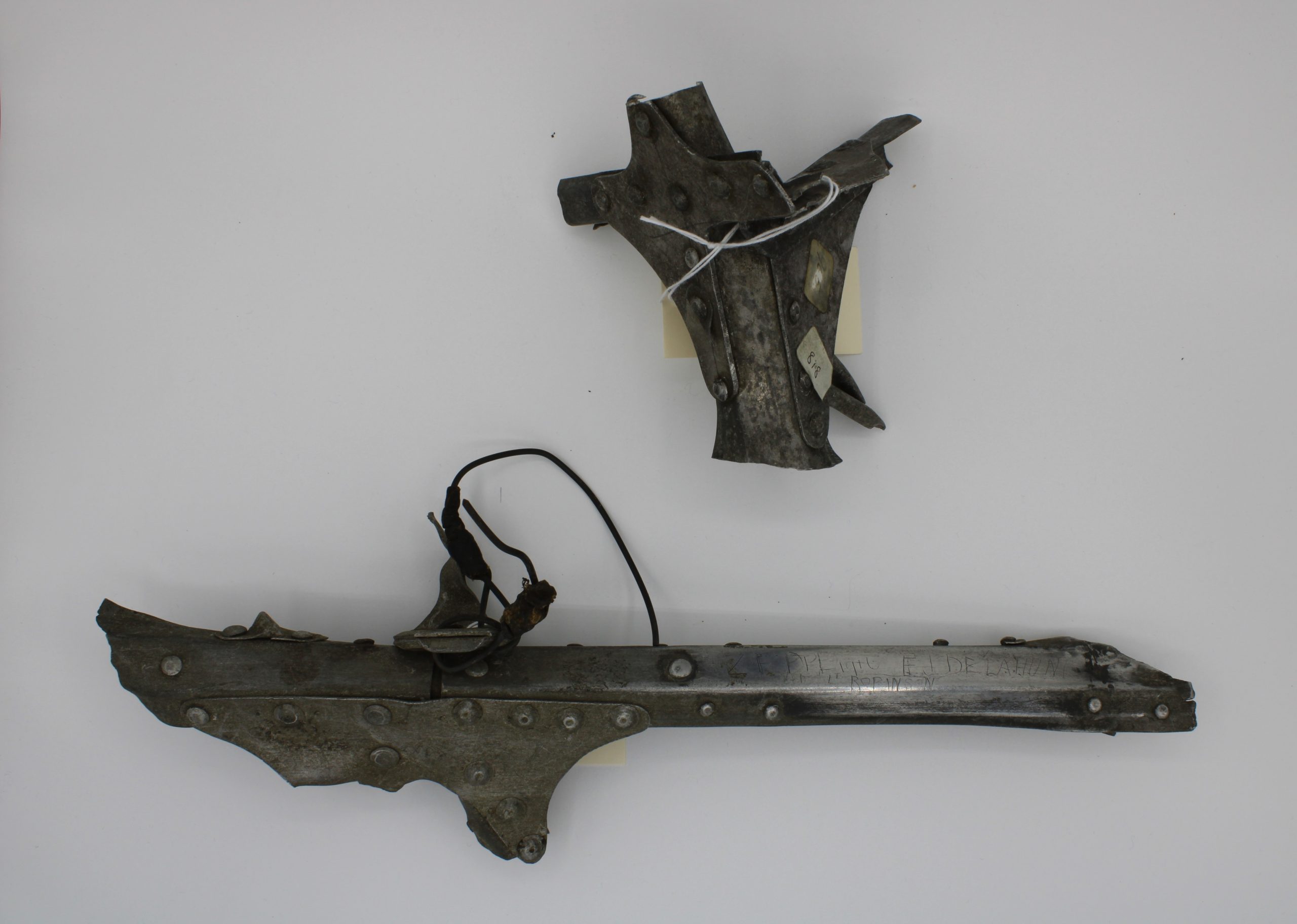
One unusual metal object with a heroic story was two pieces of debris from a German Zeppelin shot down by Lieutenant William Leefe Robinson. Formerly mounted in the Victoria Cross case, these pieces were removed and stored in a separate container due to their size and sharp edges. Attempting to share a box with another object would risk damage or overloading the box.
On the night of the 2nd September 1916, Leefe Robinson, then attached to the Royal Flying Corps, became the first man to shoot down a German Zeppelin airship over England. He wrote to his parents in the following month of the praise he had received. Robinson was presented with the VC within 48 hours, the fastest ever recorded. Two twisted pieces of the zeppelin were forwarded to Norton Barracks in 1939 for inclusion in the regimental museum.
Early in 1917, Robinson was taken prisoner and held in camps throughout the rest of the war. As the famous ‘Zeppelin Destroyer’, he suffered badly whilst a P.O.W and spent months in solitary confinement. After the war Robinson succumbed to the flu that killed millions between 1918-1919.
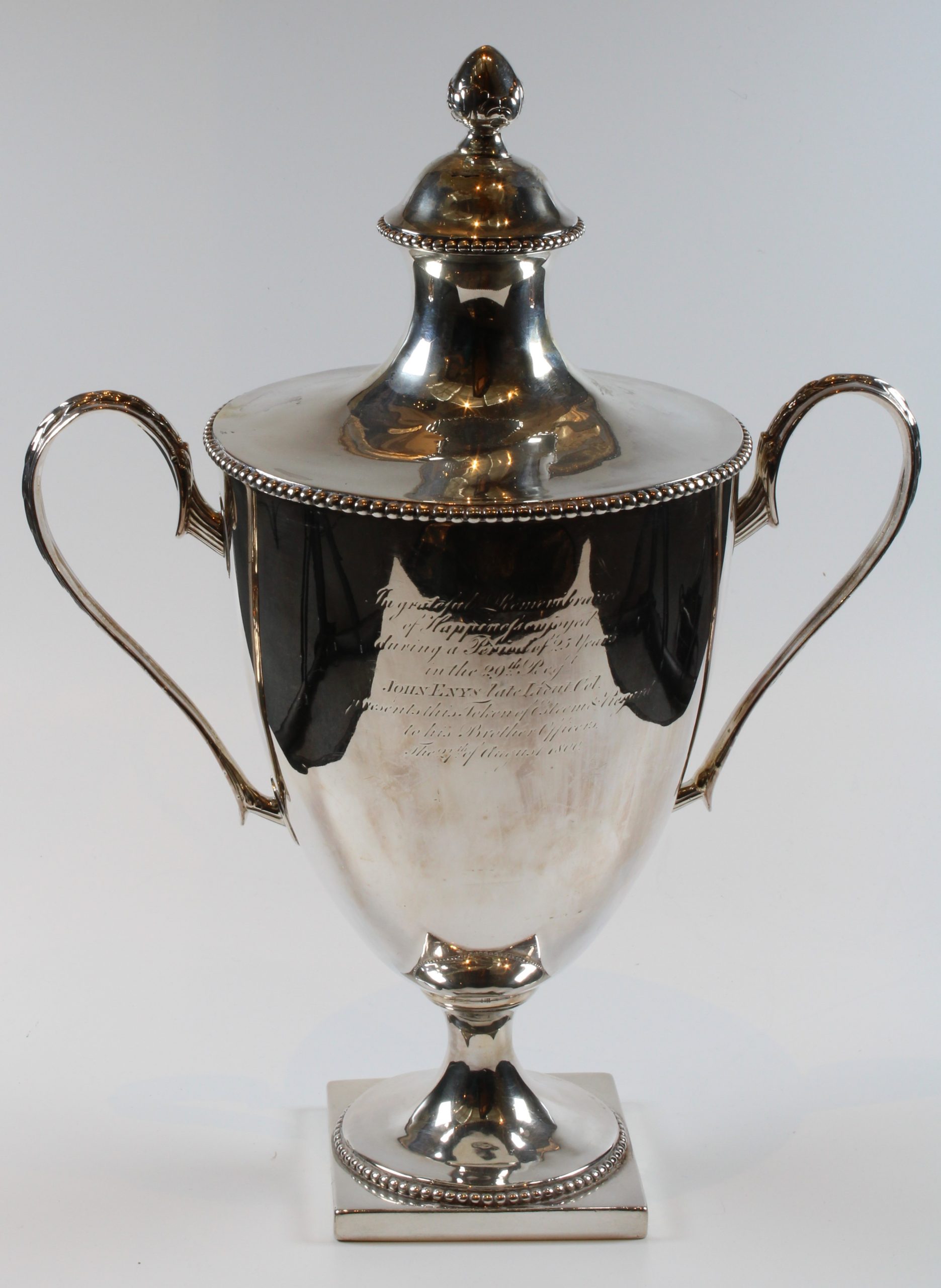
Some of the museum’s silver collection was gained via donation or presentation to the regiment. One such item which was removed during the gallery decant in September 2025 was the Enys Cup, presented to the 29th Regiment of Foot by Lieutenant Colonel John Enys in 1800 as a token of esteem after 25 years of service. John Enys joined the 29th Regiment as an ensign in 1775 at the age of 18.
For silver and metal handling, the use of nitrile gloves was important to avoid tarnishing the silver further or getting compounded dust onto your hands. Many of the objects proved heavier than expected, a small silver snuff box belonging to the 36th (Herefordshire) Regiment of Foot was remarkably heavy for its small size.
Our Museum Blogs page contains more timelapse videos on the gallery deinstallation, including uniforms and equipment!
People Facet Tree