

Gallery Decant – Part 2
Deinstalling the Worcestershire Soldier Gallery…
After the removal of all firearms from the former Worcestershire Soldier display, our museum team progressed with the deinstallation and packaging of swords and other edged weapons.
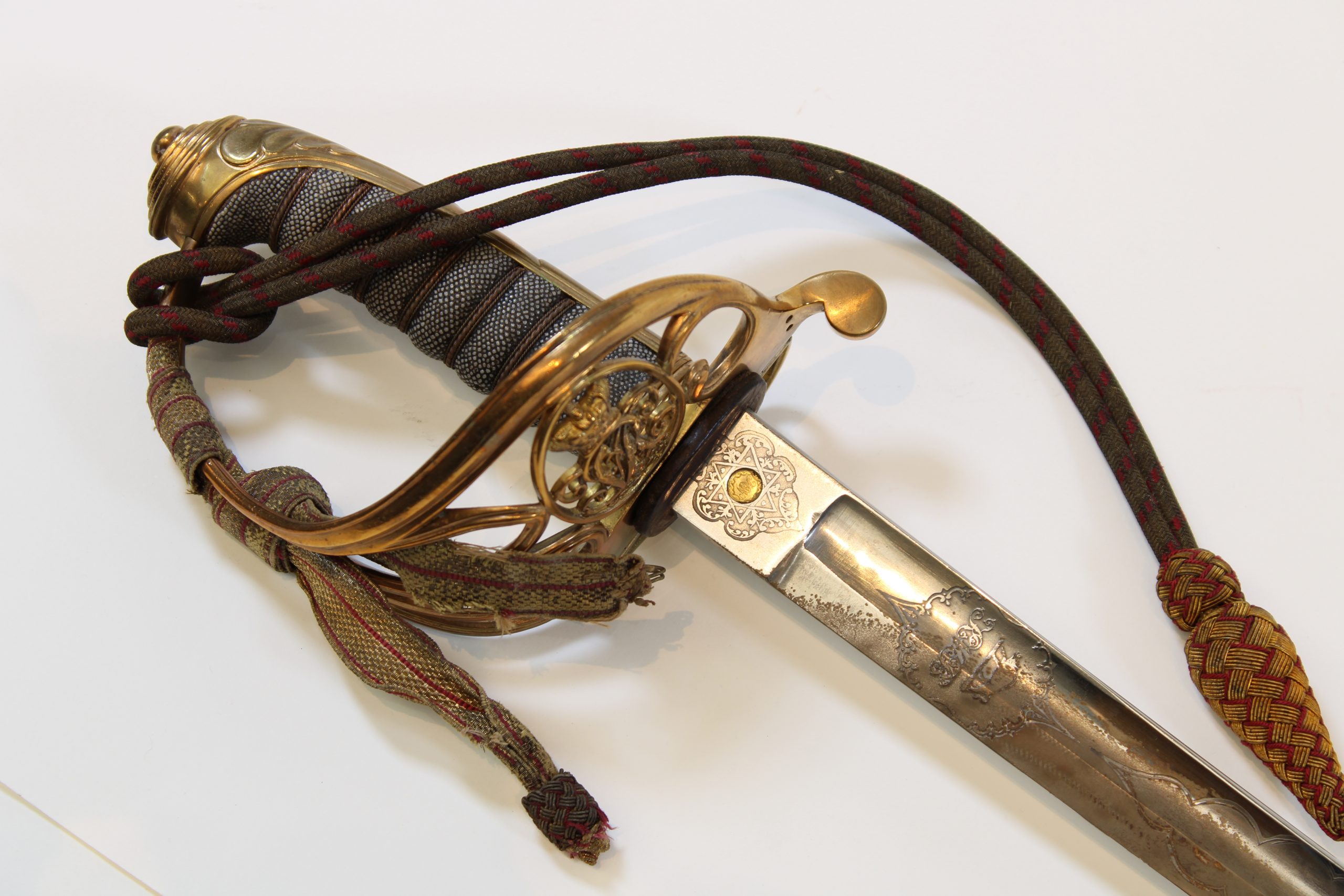
A grand total of 19 edged weapons were removed from the gallery, including 14 swords, and 2 bayonets. Many of the museum’s collection boast beautiful engravings and artfully crafted hilts. A Rifle Volunteer Officer’s sword belonging to Charles J. Dixon is marked with the cipher of Queen Victoria and is delicately engraved along the blade edge.
Many of the swords which were deinstalled and packaged could be linked directly to an individual or campaign. Removed from the Sikh Wars gallery case was a British Army, Infantry Officer’s sword with khaki cloth cover, belonging to Captain Kenrick Verulem Bacon. Captain K. Bacon fought during the Indian Mutiny and participated in the taking of the Boogloomara and Panchnuddia Passes. The sword of his son, Basil Kenrick Wing Bacon was then removed from the Wars of Empire case. Major B. Bacon fought during the Boer War and was involved in the action at Slingersfontein on 12 February 1900.
A selection of the swords formerly on display were brought home by soldiers of the Worcestershire Regiment after being captured from the enemy. These objects offer insight into the type of weaponry used by enemy troops and shows us some of what our soldiers were facing whilst on campaign. Taken off display was a Panga, a type of machete originating from East Africa known for its curved blade, and a Kurki, also known as Khukuri; a traditional knife and short sword originating in the Indian subcontinent.
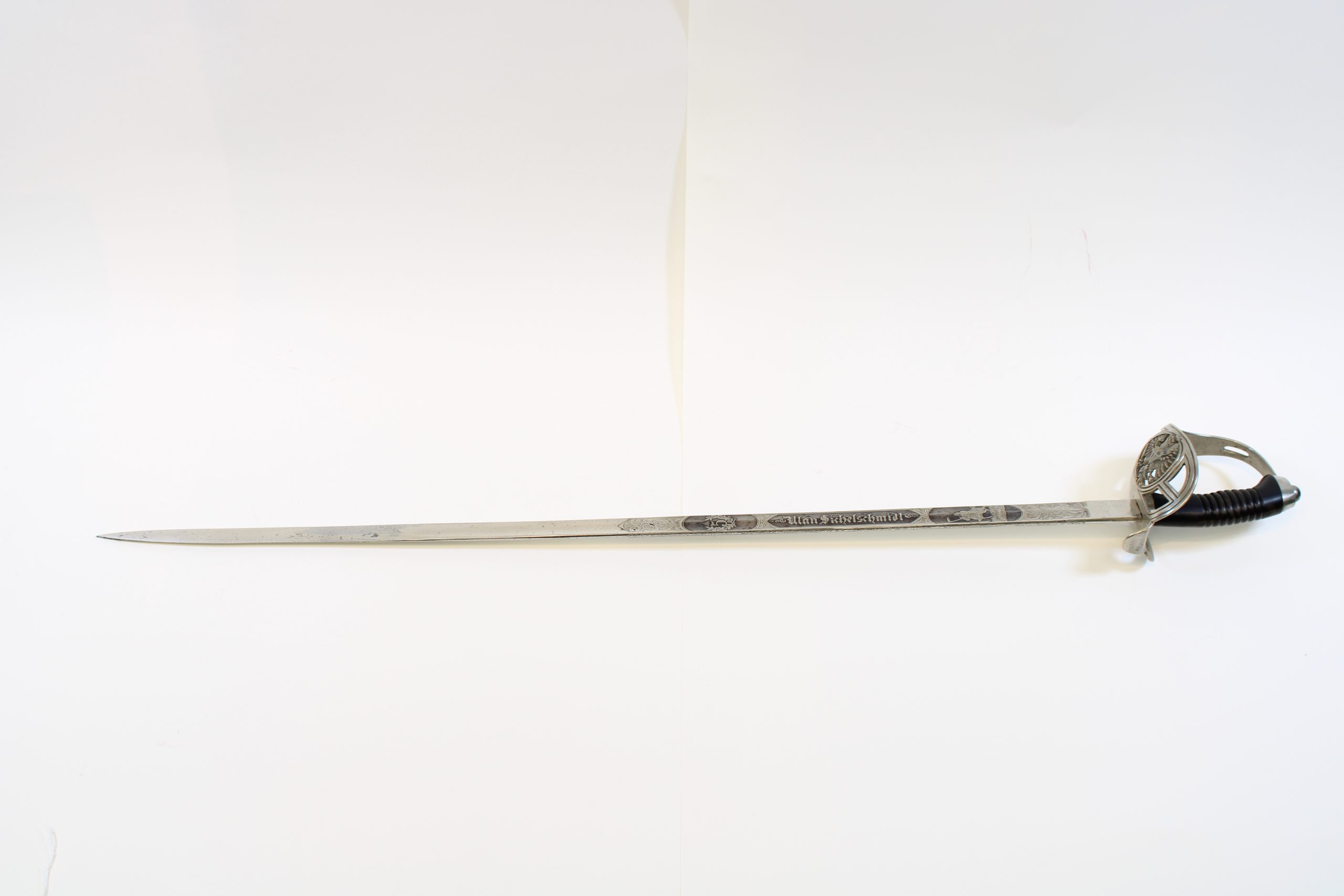
Much later, from the First and Second World War cases, the museum team removed an Imperial German Army, Prussian Infantry Officer’s sword, a Japanese Officer’s curved blade, and a Turkish Army Officer’s sword with brass hilt and steel blade. The Prussian Infantry Sword comprises a brass hilt with a Prussian Eagle on the guard and presents a masterful piece of artwork and weaponry.
Some of the challenges faced when packaging edged weapons included capturing the details of the blades and gilded hilts without reflections, and stabilising the blades themselves. Three to four blades were packaged together in a large archive box to maximise space. This required using archival tape and pins to fasten the swords to a plastazote foam base and ensure they would not move during transportation. Should the blades be unstable they could damage each other and the storage box when moved.
For more insight into the gallery decant 2025, check out the Gallery Updates area of the Museum Blogs page for timelapse videos showing what we did and how we did it!
People Facet Tree