

Moving out of the City Museum
A major milestone in the project was completed in 2025 with the deinstallation of the existing displays in the City Art Gallery and Museum, starting with the relocation of the Battle of Gheluvelt painting.
Relocation of J.P. Beadle’s Battle of Gheluvelt painting
On 27th August 2025 J.P. Beadle’s artwork commemorating the bravery of the Worcestershire Regiment at the Battle of Gheluvelt in 1914, became the first major object from the museum’s collection to be relocated as part of the Worcestershire Soldier at The Commandery Project.
Created in 1920 and purchased by the regiment, Beadle’s painting previously sat in the former Worcestershire Soldier Gallery. To maintain public access to the painting, Beadle’s work was removed, transported, and reinstalled in The Guidhall, Worcester, on the main staircase.
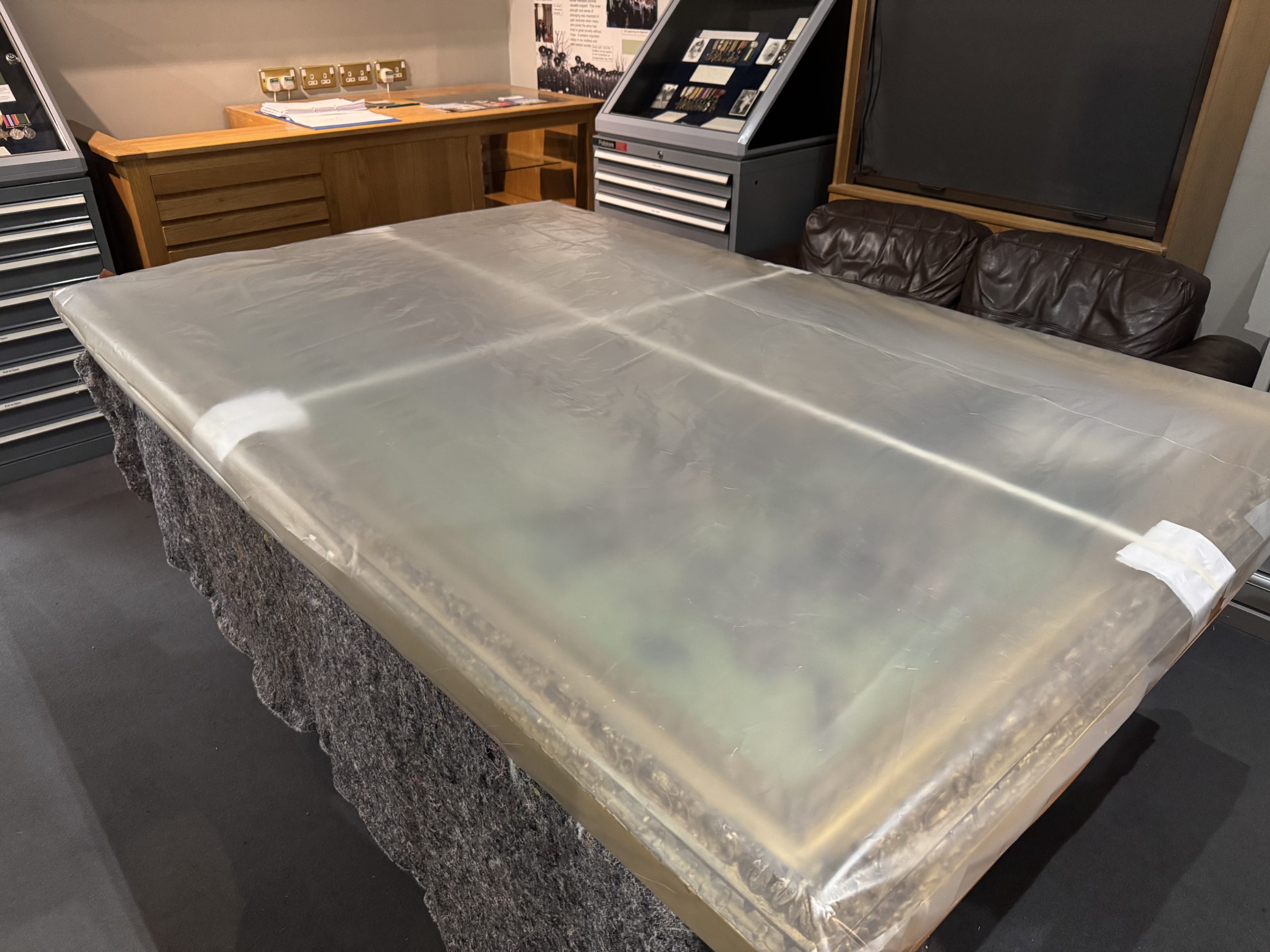
The Painting…
To create an accurate and evoking piece, J.P. Beadle corresponded with the surviving members of the 2nd Battalion the Worcestershire Regiment to record every detail of the hard-fought battle, like who was present during the action and where, and details of uniforms and weaponry. He then had each surviving soldier of the Worcestershire Regiment sit for his portrait.
Three individuals are mentioned in Beadle’s letters as having sat for their portraits. Brigadier Senhouse Clarke, Major Hankey, Colonel Reddie, and Captain Bowring, to whom many of Beadle’s letters are addressed. During one letter to Captain Bowring, Beadle criticises Major Hankey and Colonel Reddie over inconsistencies in their descriptions of uniforms.
Several officers sent Beadle sketches of Gheluvelt, along with their personal recollections of the event. In several letters to Captain Bowring, Beadle asks questions regarding the equipment and clothing worn during WWI and occasionally provides pre-designed sketches for Bowring to comment on. From these letters we gain insight into the conditions of the day and the mentality of the soldiers.
Lieutenant E. R. Hudson recalls that when the battalion reached the top of the ridge “we came under murderous artillery and small arm fire, which seemed to come from all sides”. Lieutenant Hudson was subsequently wounded by a sniper taking pot shots at him during the advance.
Unable to sell his painting to the Royal Academy, who believed the public were “tired of the late war and want peaceful things”, Beadle’s painting was purchased by the 2nd Battalion the Worcestershire Regiment.
In his letters to Captain Bowring of the 2nd Battalion, Beadle expressed that his “primary objective in painting the picture was patriotic, I think these deeds of our men should be handed down historically in paint as well as by every other means”.
Deinstallation of the Gallery
With the closure of the Worcestershire Soldier Gallery in August 2025, a complete deinstallation of the former exhibit took place in September and October. This was undertaken by our dedicated museum team with support from the team at Worcester City Museum & Art Gallery.
Over twelve days 500 objects which made up the Worcestershire Soldier Gallery were removed and carefully packaged for temporary storage. The collection will remain in storage until the gallery is reinstalled in its’ new home at The Commandery, Worcester.
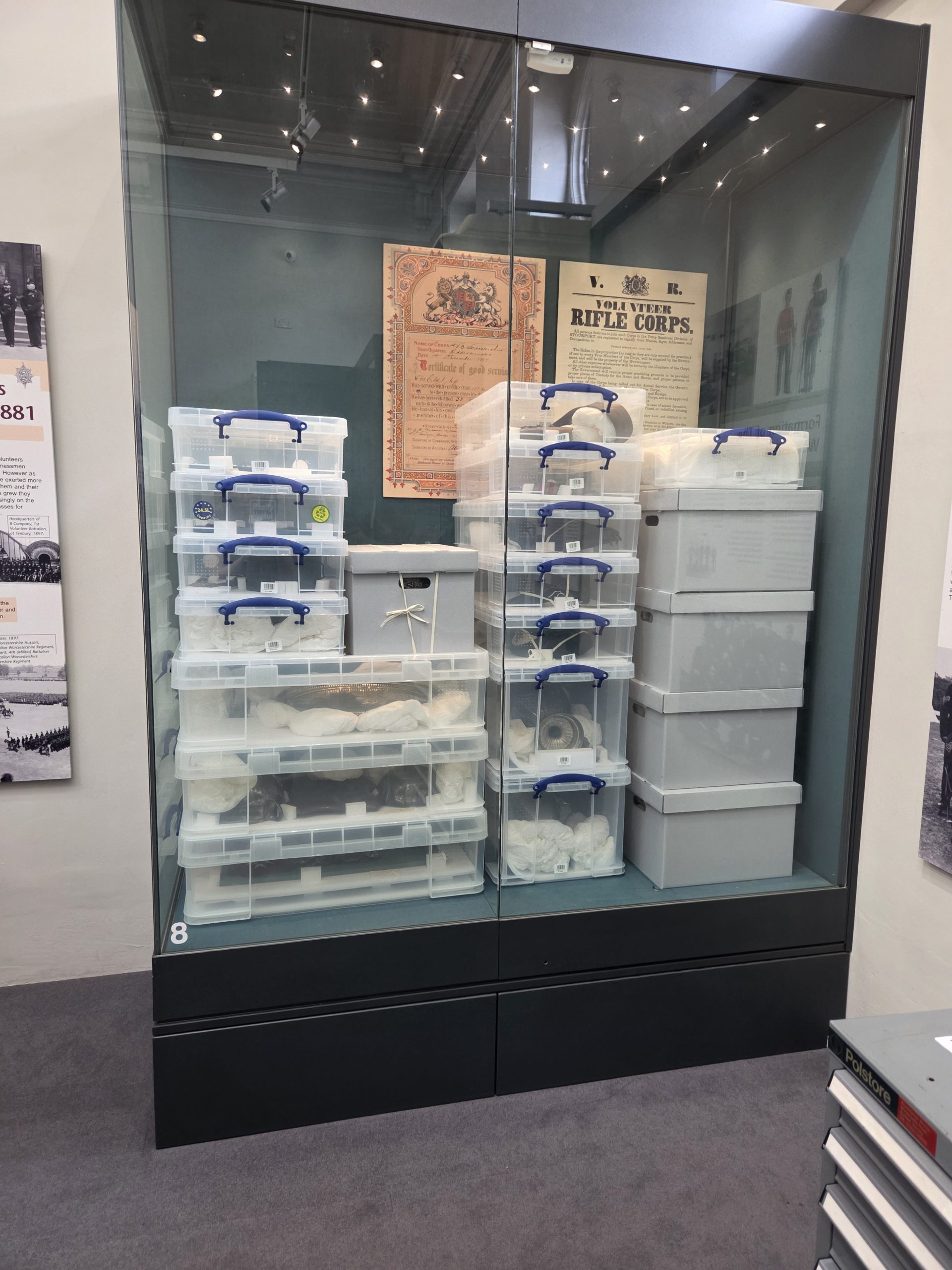
What did we do?
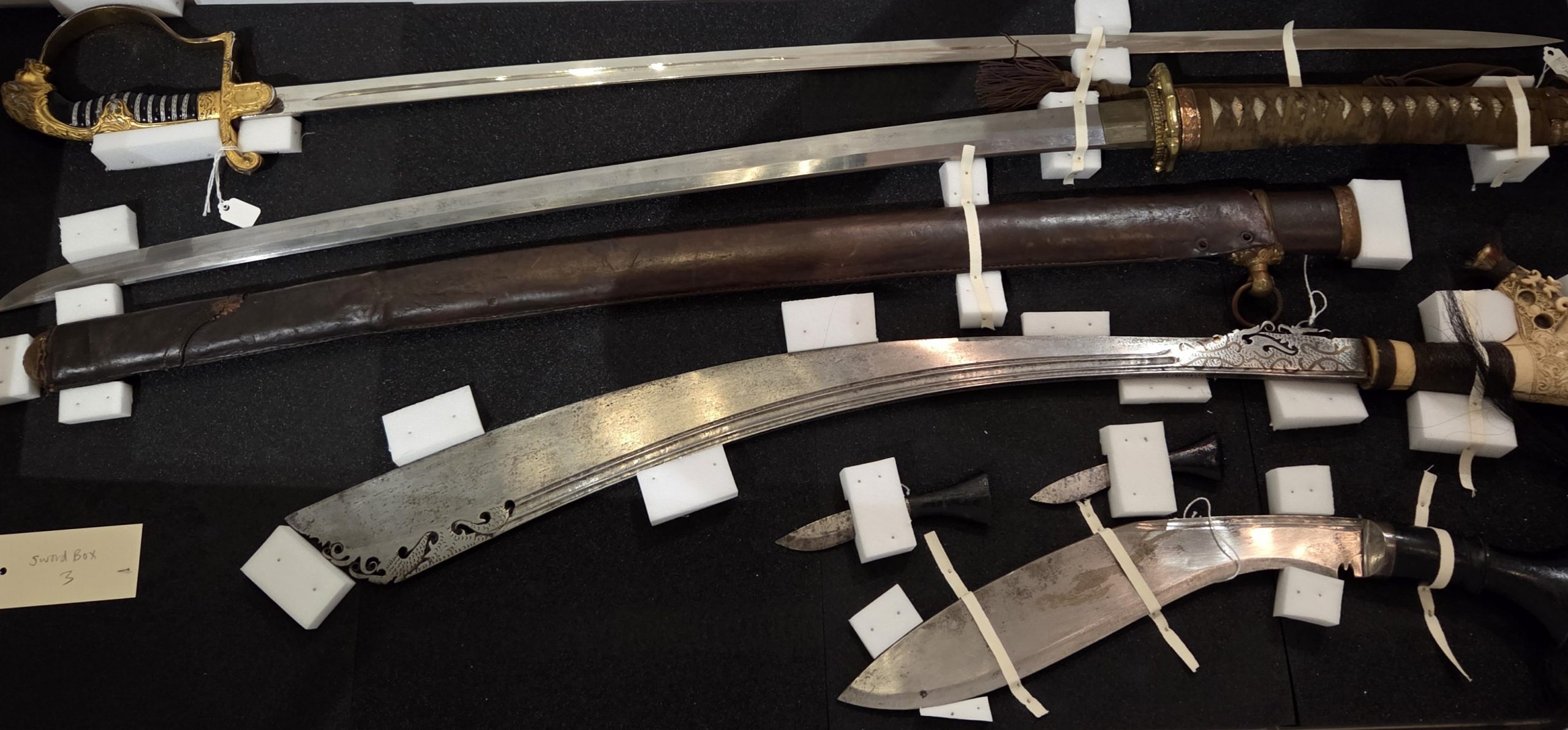
In total, decanting the gallery involved the removal of over 500 objects from the Museum’s collection, specifically:
- 82 Uniforms
- 279 Medals
- 31 Sets of Equipment
- 11 Firearms
- 19 Edged Weaponry
- 31 Badges
- 13 Pieces of Silver
- 10 Framed Pictures
- 5 Regimental Flags
- And a small collection of items such as ammunition, statuettes, plaques, and photographs
How did we do it?
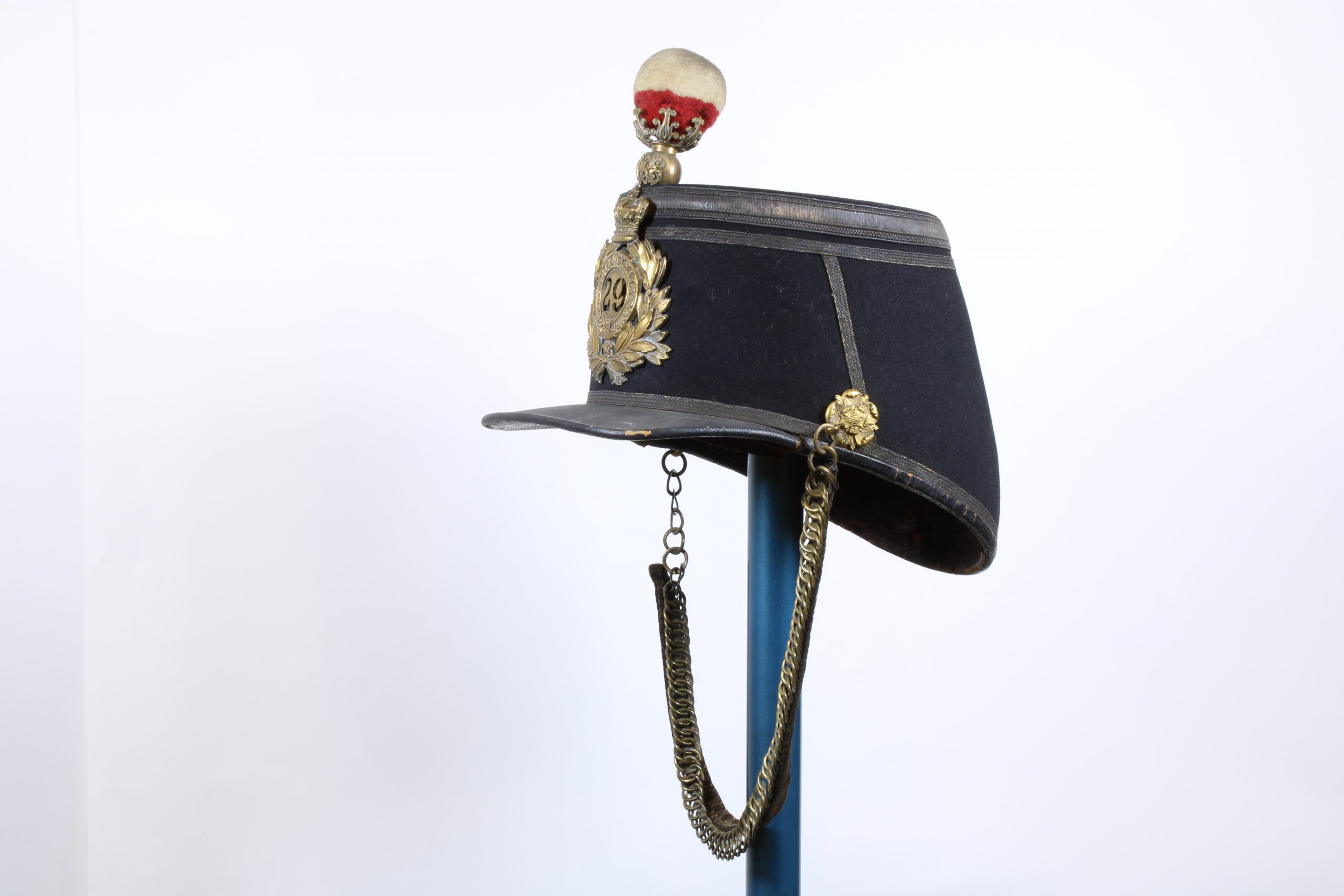
To ensure the gallery was packed safely and efficiently, our museum team followed a planned thematic approach to remove every object one group at a time, beginning with Firearms.
After an initial sympathetic clean, each object was labelled with its correct archival accession number using acid-free labels. This method ensures the accurate documentation of the gallery and will assist with locating the collection in the future.
Our Collections Manager then undertook a brief condition check on each object, recording any tarnish or deterioration. These records may be compared against the original condition reports taken during the gallery’s initial installation in 2003, which can tell us how our collection has faired over the last 22 years. Detailed photographs were then taken, capturing areas of concern or interest, which can be referred to when planning future conservation or deciding where and how an object should be displayed in the New Worcestershire Soldier Gallery.
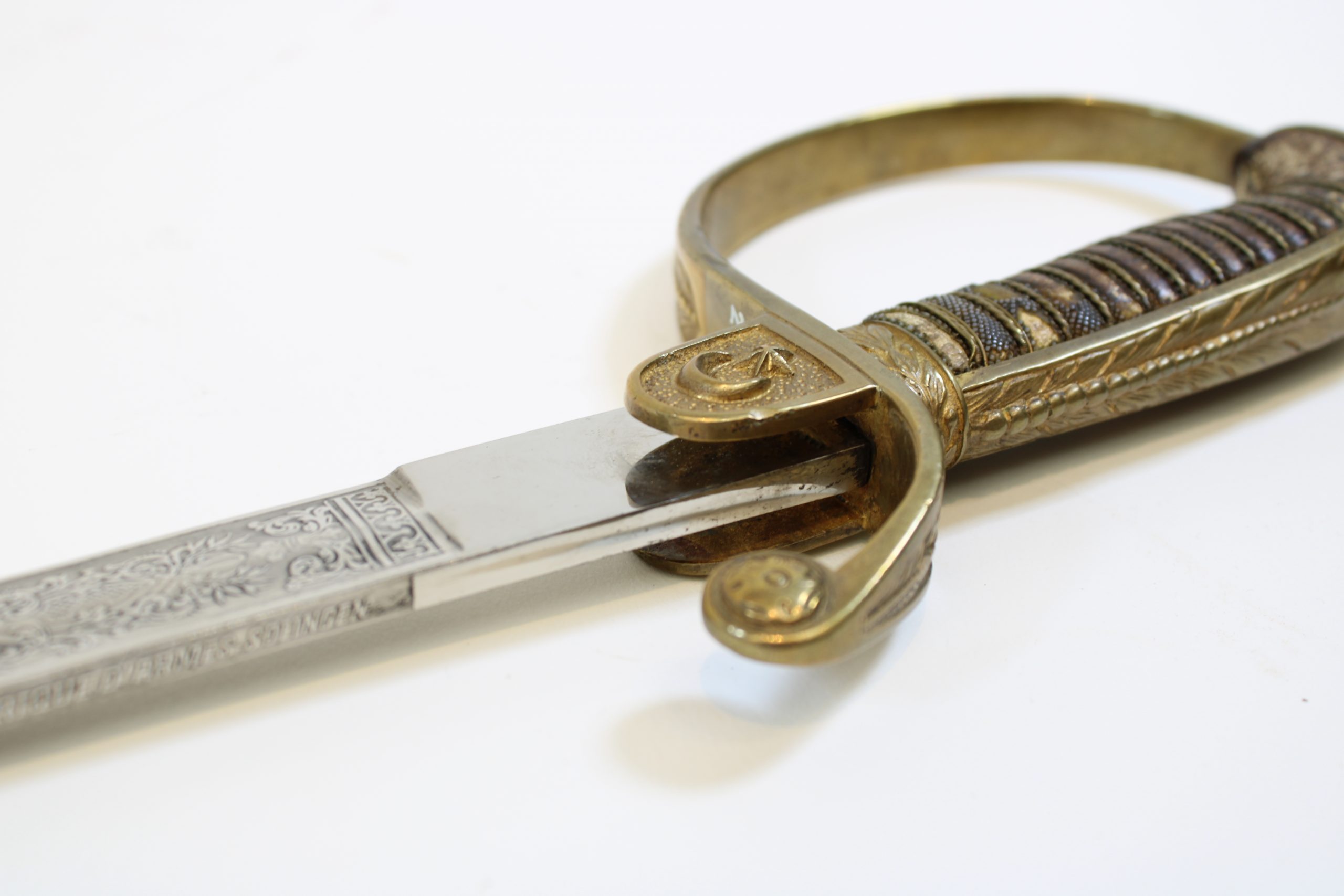
Suitable, conservation friendly, storage containers where then used to package the collection for transportation off- site. A repeated process of pinning, tying, taping and wrapping filled almost 84 hours of work. Over 1,000 pins and 74 storage boxes were used to safely secure each precious object. Tissue paper to support objects packed into boxes and layers of bubble wrap and carboard covered framed artworks.
What else?
- Uniforms and clothing packaged into Tyvek Garment Bags
- Equipment and Weaponry wrapped in acid-free paper and stored/pinned into Archive Boxes
- Souvenirs, Mementos, and smaller objects pinned onto closed-cell polyethylene block foam and placed in Plastic Containers
New Discoveries…
Removing, cleaning and condition checking every object provides the opportunity to inspect the collection for any damage and take a closer look at any interesting items. This process also presents the chance for new discoveries. Some additional objects were uncovered during the deinstallation of the Worcestershire Soldier display which had been secured to uniforms.
A shovel and entrenching tool were found in the equipment belt attached of the WWII Officers’ Battledress. This had not been seen since the gallery was originally installed in September 2003. A small compass was also found in the equipment pocket of the WWI Officers Jacket. The compass had creased the leather of the pouch and discoloured a ring in the fabric.
In several uniforms, names and service numbers were sown into collars for identification purposes which have proven useful for connecting our uniforms to soldiers and their stories.
For more insight into the deinstallation of the Worcestershire Soldier Gallery, take a look at our Blogs page. Here find week-by-week updates shared on our Facebook and Instagram pages during September/October 2025.
People Facet Tree