

The Siege of Gibraltar 1727-29
Background
At the outbreak of the Anglo-Spanish War in 1727, King Philip V of Spain’s senior military advisers warned him that the recapture of Gibraltar from the British was near impossible. However, the King was much impressed by the Count de las Torres de Alcorrín who vowed that he could: ‘in six weeks deliver Spain from this noxious settlement of foreigners and heretics’. Despite his Flemish born engineer, Marquis de Verboom’s pessimism, the King gave de las Torres orders to assault Gibraltar.
The Count mustered his besieging troops at San Roque at the start of 1727. In total it comprised a force of somewhere between 12-20,000 men consisting of thirty infantry battalions, six squadrons of horse, seventy-two mortars, and ninety-two guns. Both the Governor of Gibraltar (the Earl of Portmore) and the Lieutenant Governor (Brigadier Jasper Clayton) were absent in England when the Spanish arrived. Colonel Richard Kane was in temporary command of the sparsely defended British garrison of approximately 1,200 men drawn from Pearce’s Regiment (later the 5th Foot), Lord Mark Kerr’s Regiment, (later the 13th Foot), Egerton’s Regiment, (later the 20th Foot) and Bisset’s Regiment (later the 30th Foot). Kane took immediate action expelling the 400 Spanish residents and seeking to improve the Rock’s defences.
Meanwhile in England, several companies of Colonel Disney’s Regiment (later the 29th Foot) were ordered to march at once to Southampton; these, together with Col. Anstruther’s (later the 26th Foot), and Newton’s Regiments (later the 39th Foot), having embarked at Portsmouth on Sir Charles Wager’s fleet, landed at Gibraltar the 3rd of February, bringing with them Brigadier Clayton.
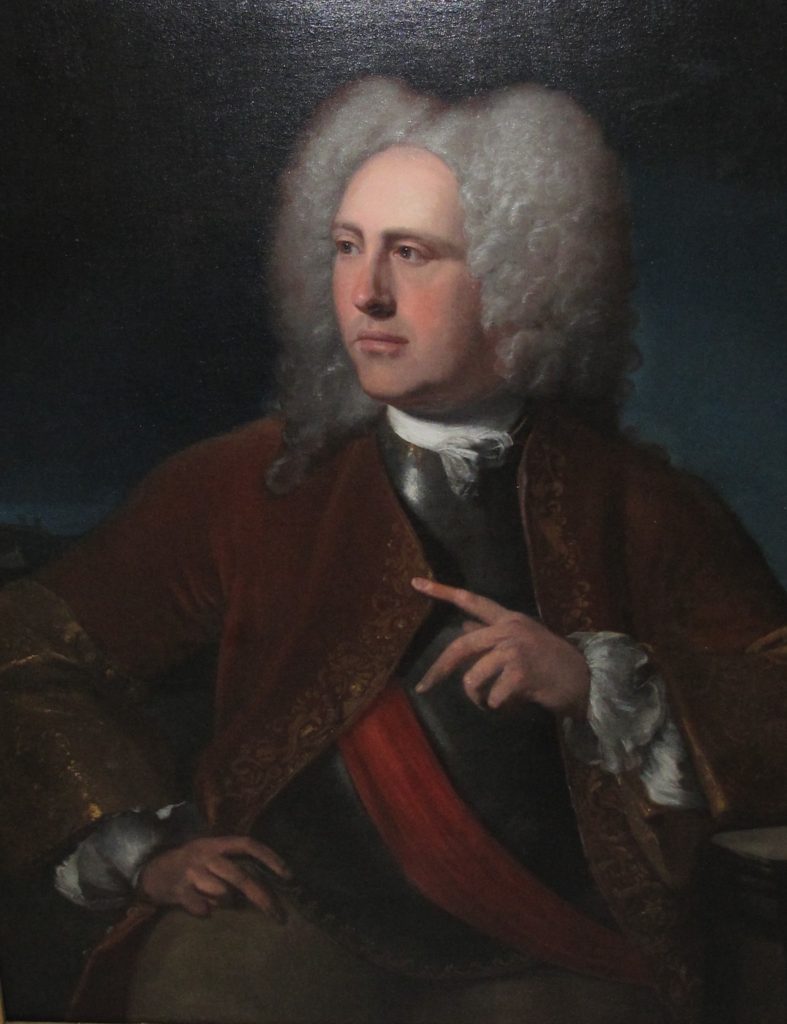
On arrival the establishment of Disney’s Regiment was 35 officers, 20 sergeants, 20 corporals, 10 drummers, and 340 private men. (The following casualties were suffered by the Regiment during the siege. Died of disease – Captain Gilmour and 2 Rank and file. Killed- 2 Rank and File. Deserted- 2 Rank and File.)
The Siege Commences
The only avenue of attack open to the Spanish was along a narrow funnel of land that ran between the sea and the western side of the North Face of the Rock. This narrow strip would come under fire from three sides: Willis’s battery to the east, the Grand Battery to the south, and the Devil’s Tongue Battery on the Old Mole to the west.
In early February, Spanish sappers had moved down from San Roque to the isthmus and started to construct siege lines. De las Torres’s first attempt was by cover of night. He sent five battalions and 1,000 working men forward to take the Devil’s Tower and to dig trenches parallel to Gibraltar’s walls. The finished trenches should have provided the attackers with a good position from which to assault the town. However, Admiral Wager moved his Naval squadron out of the bay to the eastern side of the isthmus, and at point-blank range pounded the sappers with enfilading fire for three days, inflicting on them at least 1,000 casualties. The Spaniards soon built batteries to drive away Wager’s fleet, but even so the appalling weather in February made digging and maintaining the trenches impossible.
Willis’s battery, on the North Face of the Rock, which had given the Spaniards considerable trouble, became their next objective. The Spanish planned to mine under it “… and to fill the cavity with 400 barrels of powder”. This operation was noticed by and initially alarmed the defenders. However, the limestone under Willis’s battery proved far too solid to excavate and the operation ended in failure.
The first bombardment
Having failed to establish a position for a successful land assault, and lacking naval support, De las Torres’s only remaining option was to bombard the British into surrender. On 24 March the Spanish began. Their bombardment continued unabated for ten days. But things were not going well for the besiegers and an official Spanish published in 1727 reveals their situation.
“Desertion becomes very considerable, the troops greatly diminished by sickness. Some fresh troops are coming from Malaga to ease those in camp who are greatly fatigued by hard duty: no sally yet made from the town, as the constant rains have hindered the advance of our works, and it is supposed they [the British] thought their artillery sufficient to check our progress. We have yet dismounted only three of their cannons on the curtain and deserters say they have not had above 15 men killed yet.”
More British reinforcements arrived in Gibraltar on 7 April, including Middleton’s Regiment (later the 25th Foot) and Haye’s Regiment (later the 34th Foot) from Menorca. Finally, on 1 May the Governor, the Earl of Portmore, arrived from England with a further ten companies of the 1st Foot Guards and the Clayton’s Regiment (later the 14th Foot).
Second bombardment
By 7 May, De las Torres was ready to launch yet another heavy bombardment. This resulted in serious damage to both the town and batteries and caused extensive British casualties.
“Willis’s Battery’s in a manner demolished, the Mole half level with the sea, all the cannon but one at Willis’s Battery dismounted…. They dismounted 16 out of the 24 guns at the Old Mole… and demolished all our batteries in an extraordinary manner. At Willis’s all the Guns but two dismounted and the cover so beaten down that the men cannot do their duty. Several gunners and soldiers killed and wounded”.
The British reinforcements, however, allowed the garrison to maintain their batteries, re-mount the guns, and return fire.
Nevertheless, the firing from the Spanish guns began to slacken. After several days’ continuous fire, some Spanish iron cannon burst, whilst other brass cannon began to droop at the muzzle from overheating. The besiegers had by now exhausted most of their supplies. Whilst the garrison had ample provisions, guns, and powder brought by sea, and soon began to outgun the Spaniards.
End of the Siege
Frustrated with the Count de las Torres’s obstinacy and inability to take his advice Veerboom, had left for Madrid. Finally, on 23 June the Spanish offered a truce. The next day a British Colonel from the garrison crossed to San Roque, where a truce was agreed. By the terms of which, the Spaniards were to remain encamped outside Gibraltar, but hostilities were to cease. This uneasy truce remained until the end of the Anglo-Spanish War in 1729.
People Facet Tree