
Ten Treasures
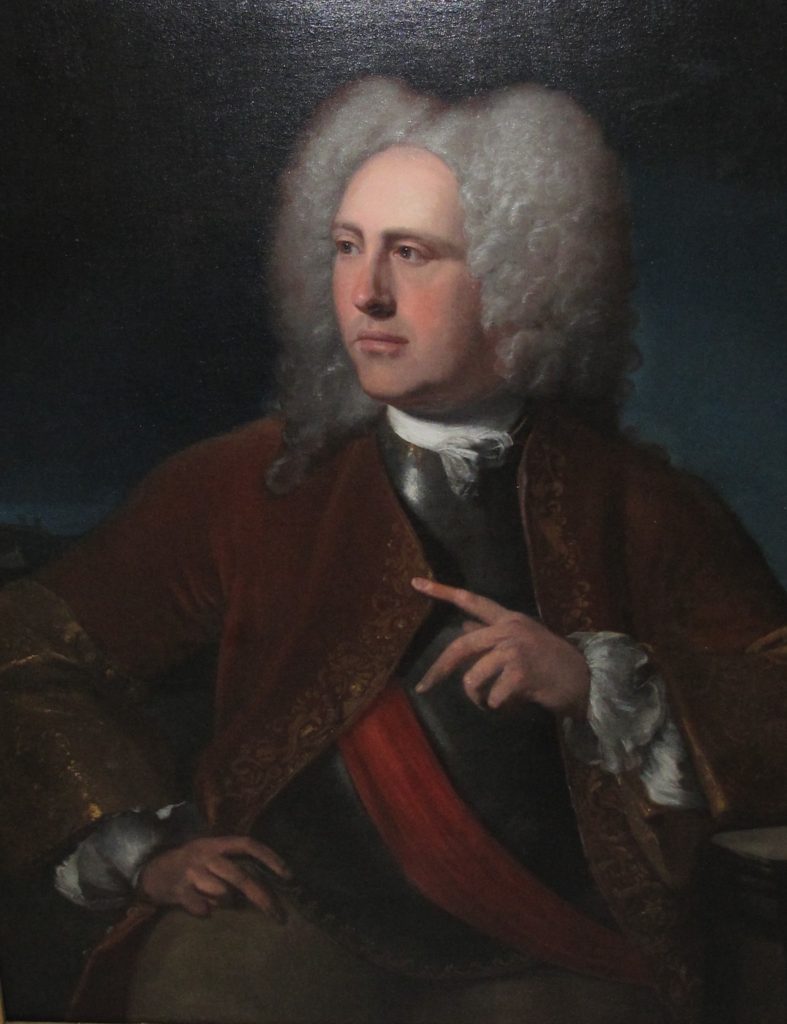 | 1. Portrait of Lt. Colonel William Kennedy, who commanded the Regiment from 1713 to 1748. This is probably the finest picture in the museum’s collection. The painting was commissioned whilst Kennedy was on leave in Italy, as his accounts show, but the artist sadly remains unknown. When he was appointed Lt. Governor of Inverness and Fort George the background of the painting was reworked to show Fort George. |
| 2. An Imperial German Garde Cuirassier Officer’s helmet captured in Flanders in 1918. Presented by Field Marshall Sir Claud William Jacob GCB GCSI KCMG (Colonel of the Regiment 1927-38) | 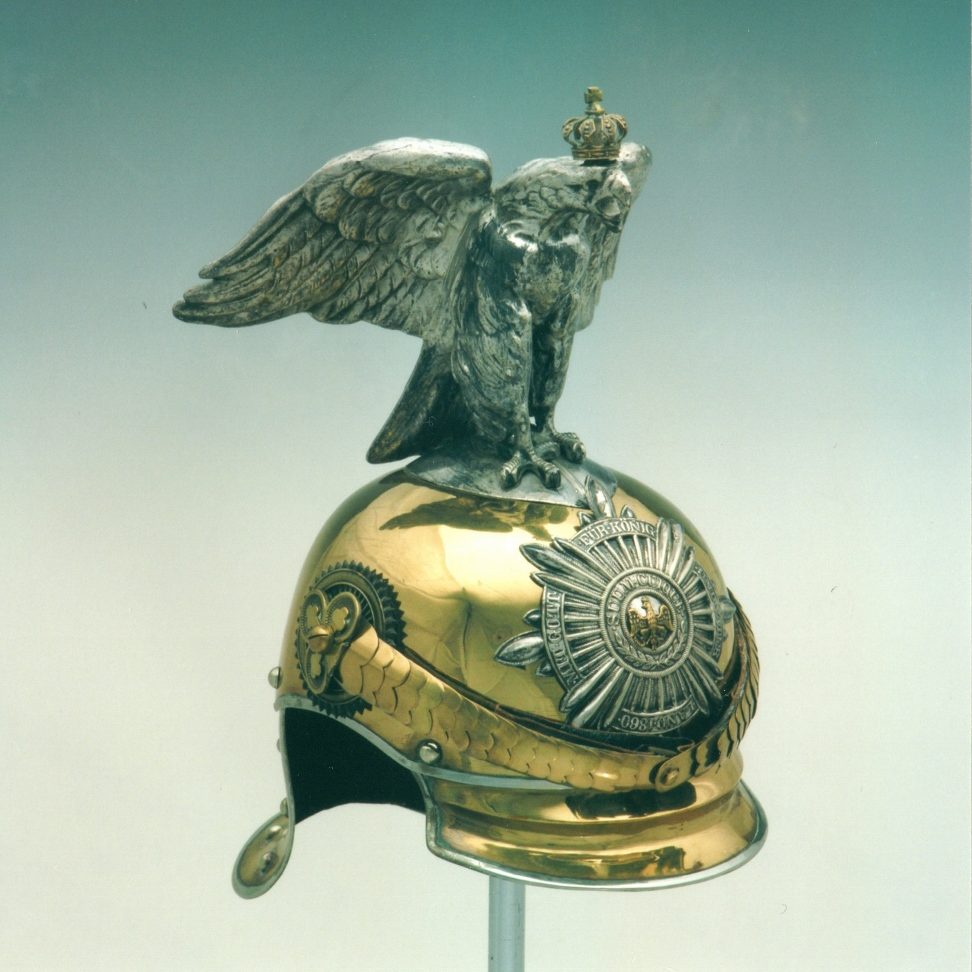 |
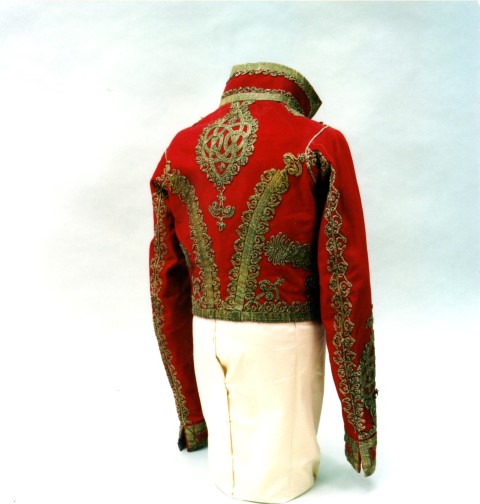 | 3. The Sikh Jacket, captured by the 29th Regiment of Foot at Ferozashah |
| 4. The 2nd Worcesters relieve the South Wales Borders at Gheluvelt 31st October 1914. Painted by J. P. Beadle. |  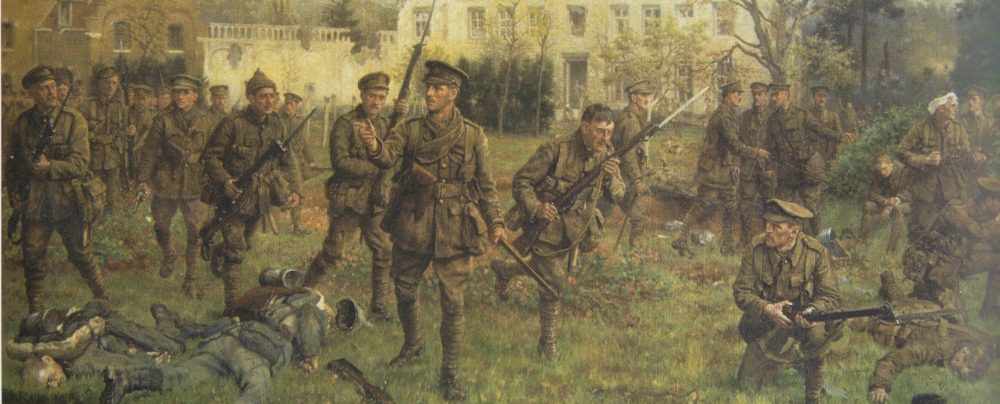 |
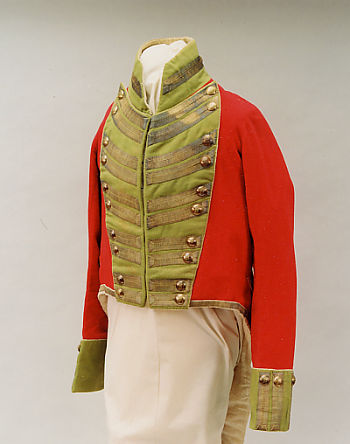 | 5. The uniform coatee c. 1814 of Lt. Colonel William Cross who commanded the 36th Regiment of Foot and was worn by him throughout the later stages of the Peninsular War. Cross entered the army as Ensign in the 62nd Foot, his commission bearing date 5th of December 1798. On 25th of February 1802, he was promoted to the rank of Captain, and on 5th May same year was transferred to 36th Regiment. In 1808 he sailed for Portugal, where he was detached in charge of three companies at the battle of Roleia, .He was also present at the battle of Vimiera and took part with the 36th Regiment in the advance on Madrid, under Lieut.-General Hope; in the subsequent retreat under Sir J. Moore, and in the battle of Corunna. On the 18th of December 1808, he was promoted to the rank of Major. He commanded the battalion from 13th of October 1811, till May 1812, when his bad health caused him to proceed to join the second battalion 36th Foot in England. He resumed the command of the battalion in Spain on 10th of December 1813, and for his service at the battle of Nivelle, November 1813, was promoted Brevet Lieutenant-Colonel, and awarded a medal in approbation of his services at the battles of Nivelle, Nive, Orthes, Toulouse (where he was severely wounded), he received a cross and was appointed C.B. On 23rd of May, 1816, he was promoted Lieutenant-Colonel. |
| 6. The magnificent solid silver centrepiece of the 36th (Herefordshire) Regiment of Foot. Made by London silversmiths, Hunt and Roskell in 1877. It adorned the dining table in the officers’ mess for over a century and is now part of the Museum’s collection. | 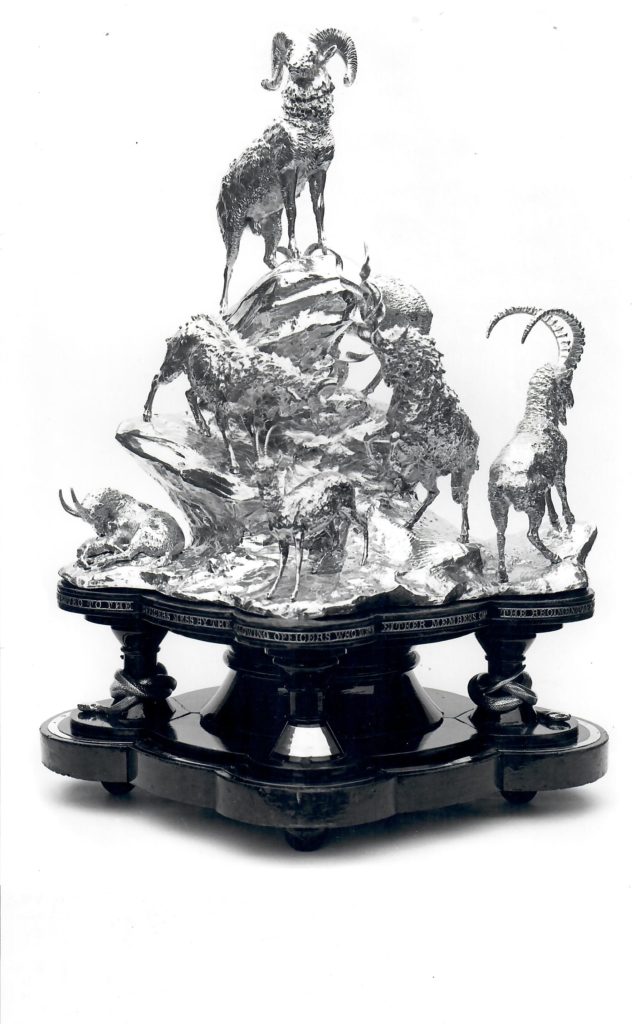 |
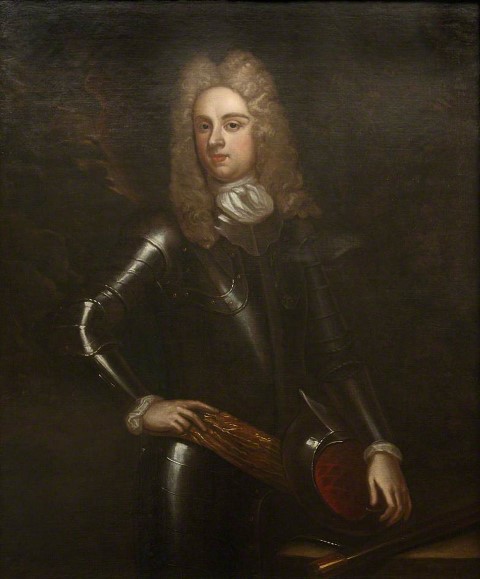 | 7. Portrait of Colonel Thomas Farrington (1664 – 1712). The founding Colonel of the Regiment On February 16th 1694, Farrington was commissioned by King William III to raise a Regiment of Foot which was to become the Worcestershire Regiment. |
| 8. Private Thomas George Turrall’s Victoria Cross. Awarded for his acts of bravery on the 3rd of July 1916 at La Boiselle. Thomas Turrall was a powerfully built man known throughout the Battalion as being a character. In fact prior to the battle where he won his Victoria Cross, his platoon commander, Lieutenant Richard William Jennings, decided to release him early from the Battalion Guardroom where he was serving a short sentence. The two men were known to have a mutual respect for one another. During the night of the 2nd/3rd July, at 0300 hrs the 10th Battalion crossed no-man’s land taking many casualties and then became involved in heavy hand to hand fighting which lasted until dawn. Lieutenant Jennings then led a small party of men, which included Private Turrall to attack a position to the flank. It was during this action that Private Turrall won his Victoria Cross. His Citation reads “For most conspicuous bravery and devotion to duty. During a bombing attack by a small party against the enemy the officer in charge was badly wounded, and the party having penetrated the position to a great depth was compelled eventually to retire. Private Turrall remained with the wounded officer for three hours under continuous and very heavy fire from machine guns and bombs, and, not withstanding that both himself and the officer were at one time completely cut off from our troops, he held to his ground with determination, and finally carried the officer to our lines after our counter attacks had made this possible.” London Gazette, September 9th 1916 Lieutenant Jennings was able to recount Private Turrall’s action but then died of his wounds a few hours later. | 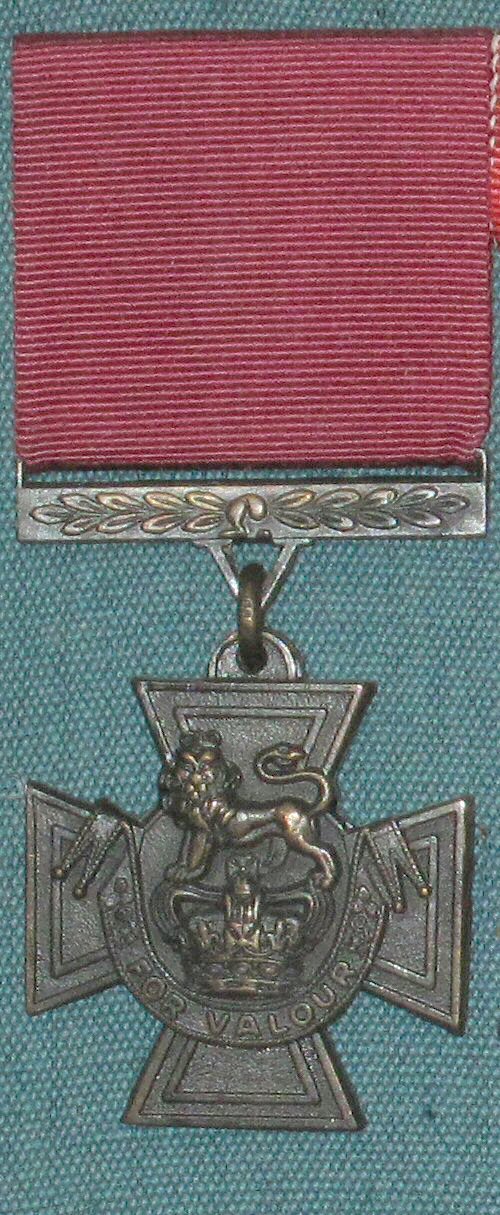 |
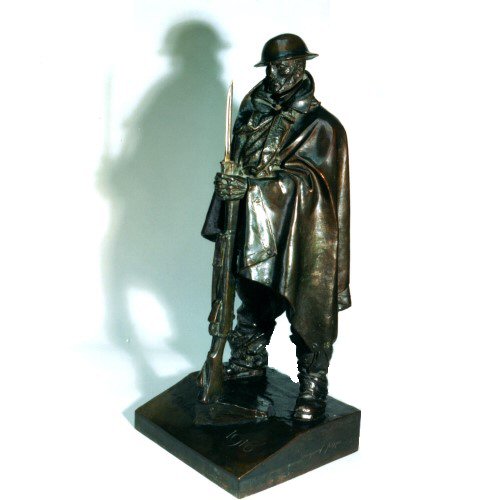 | 9. A Marquette for a sculpture of a sentry created by Charles Sargeant Jagger in 1921. In 1915 Jagger was commissioned in the Worcestershire Regiment. He served at Gallipoli and on the Western Front, and was wounded three times. He was awarded the Military Cross for gallantry. The Sentry, a life-size bronze soldier wearing greatcoat and helmet, holding a rifle with fixed bayonet was installed at Watts Warehouse (now the Britannia Hotel), Manchester. |
| 10. Military General Service Medal (1793-1814) of Drummer John Freeman. Freeman was born in St John’s Antigua and enlisted for unlimited service in 29th Foot in Swinley Camp on 13th August 1800 aged 14 years. He was discharged as a Drummer on a pension of 6 pence a day on the 15th September 1818 due to “an injury to the spine from a fall into a ditch when the Regiment was encamped on the plain of Valencienne in October 1817” In 1848, John Freeman of the 29th Foot was awarded the Military General Service Medal 1793-1814, with clasps for Rolica, Vimiera, Talavera and Albuheara. The Military General Service Medal (MGSM) was a campaign medal approved in 1847, for issue to officers and men of the British Army. | 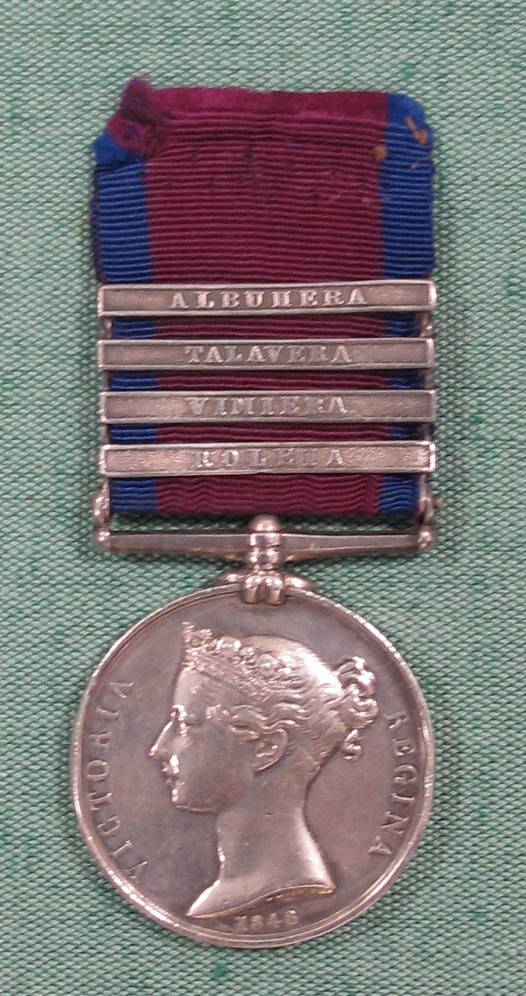 |
People Facet Tree