

The 9th Battalion of The Worcestershire Regiment in Mesopotamia March 1916 – August 1918.
The battalion was raised on the outbreak of war from civilians who responded to Kitchener’s call for volunteers. Many of the senior appointments were filled initially by officers and NCOs who came out of retirement; Lt Col M H Munn, who was commanding the battalion when it went overseas and who was killed in action in August 1915, was 50 years old and had retired as a major in 1906. It was the Regiment’s most widely travelled battalion during the war.
After training in England the battalion sailed with a strength of 29 officers and 970 soldiers as part of 13 Division to reinforce Allied forces in Gallipoli. After being reinforced by several drafts the battalion alternated between front line and reserve trenches with occasional periods of rest until the peninsula was evacuated, by which time the intense heat of summer had given way to the bitterly cold weather and blizzards of winter. The battalion embarked on 9 January and moved to Egypt.
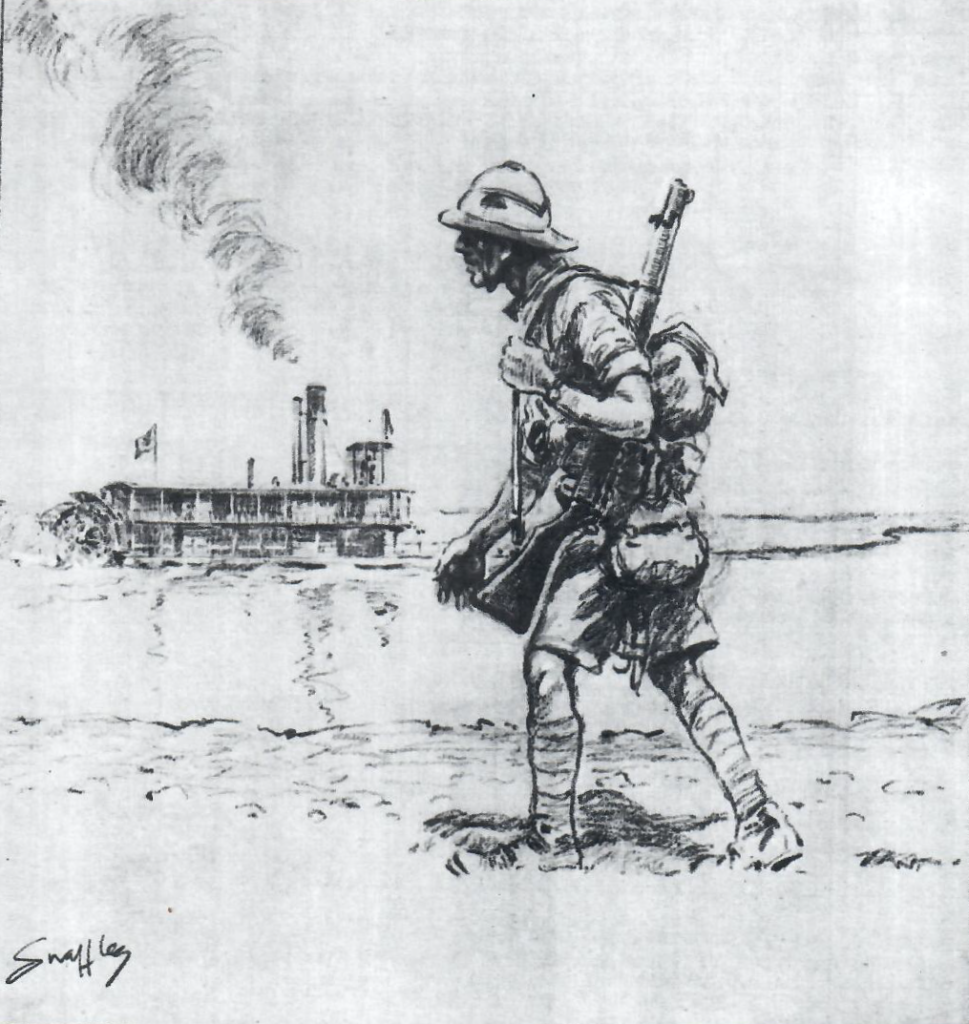
13 Division was next sent to try to relieve the British force surrounded and besieged at Kut-al-Amara. The battalion landed near Basra on 10 March 1916, sailed by river steamer up the Tigris and disembarked some 30 miles from Kut. It proved a challenging environment in which to operate with fierce heat by day and freezing temperatures by night, mud and the danger of flooding along the banks of the Tigris and the difficulty of moving across the open desert. But there was an urgent need to relieve the Kut garrison so in April a series of attacks were launched in quick succession on the Turkish trenches at Hanna, Falahiya and Sannaiyat. The first two succeeded but the third ended in failure. Overall they cost the battalion 438 killed and wounded including many of the most experienced officers; after two of the attacks the battalion was commanded temporarily by captains. Following the last of these attacks Captain E K Myles repeatedly went forward under heavy fire to rescue wounded men lying out in the open for which he was awarded the Victoria Cross. Having failed to reach Kut the garrison there was forced to surrender.
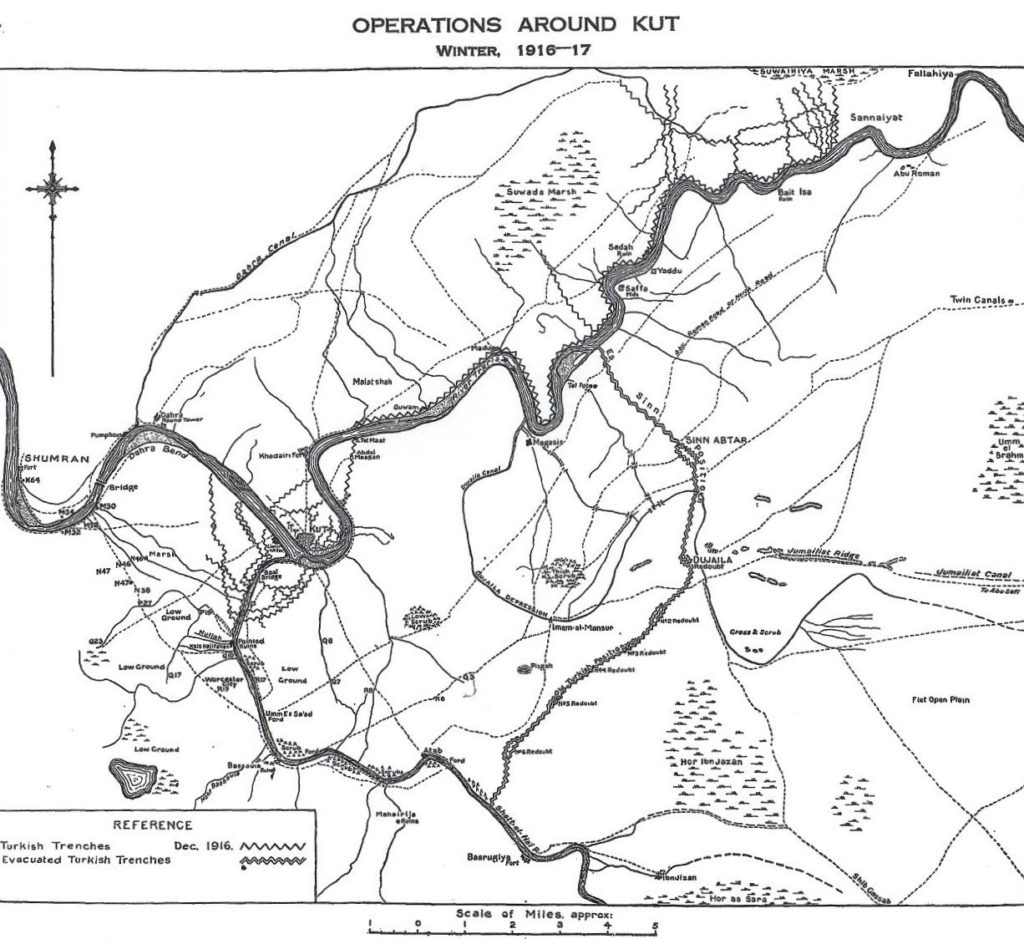
Both sides had fought themselves to a standstill and, since there was no longer an urgent need to reach Kut, the battalion was withdrawn to re-group, receive reinforcements and re-train. In December battle was resumed and by the end of February the stubborn Turkish resistance was overcome with the capture of Kut, albeit at the heavy cost of 432 casualties in the battalion.
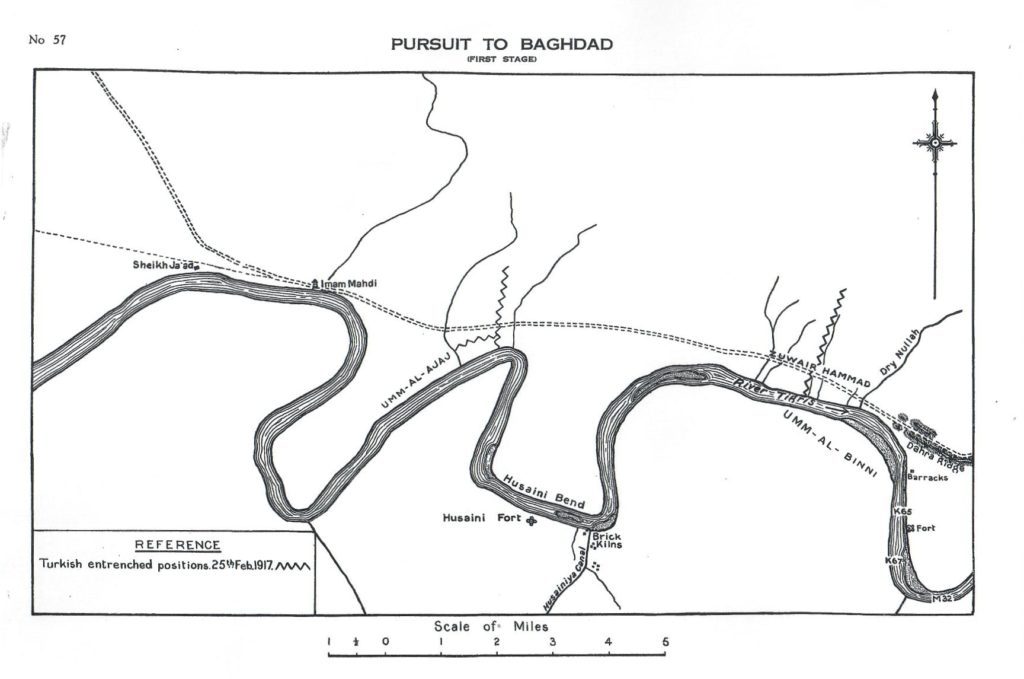
There followed a tiring march in pursuit of the retreating enemy in the summer heat until reaching Baghdad in March. From there the battalion moved to occupy a defensive position around Windhiya north east of Baghdad where it remained until June 1918.
People Facet Tree