

The Kaiserschlacht: German Spring Offensive 1918:
Introduction
In early 1918 the Western Front had been locked in stalemate since the winter of 1914/15. All that was changed by the Kaiserschlacht, a series of major German attacks intended to destroy the British army and win the war in 1918 before the Americans became seriously engaged. Although the USA had entered the war in 1917, her army was still under development and realistically was unlikely to make a difference until 1919. At that point the numbers would make a German defeat inevitable, so Germany had to win in 1918 or lose the war. And the defeat of Russia in 1917 released manpower which offered the possibility of a German victory in the west.

The German attacks were based on one very old and two new ingredients. The old ingredient was surprise. The attacks were expected; but where and when were cleverly concealed.
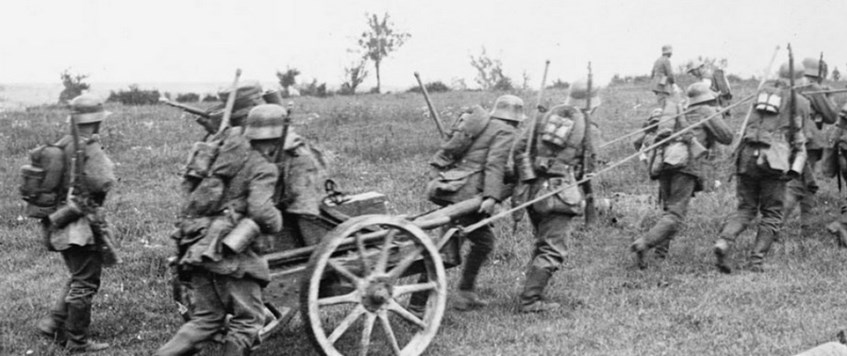
The first new element were the Stormtroopers, infantry specially trained to move speedily, by-passing defensive strongpoints and penetrating deeply into and behind enemy positions.
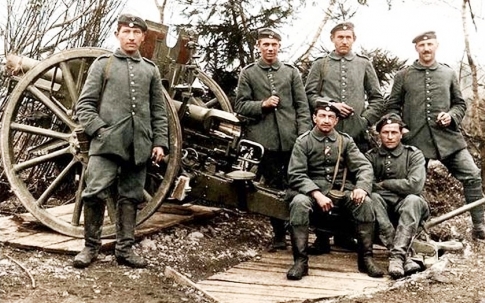
The second was the very skilful use of artillery to provide relatively short but very intense bombardments of selected targets. These mixed gas and high explosive shells, to smash communications and cause confusion, as well as wreaking havoc in the defences. The relatively brief bombardment.
The Intial Phases
In their initial attack on 21 March 1918 (Operation Michael) the Germans had two advantages. First they chose to attack the British forces at their weakest point, the junction with the French army, and where the British had recently taken over French lines. The defences were wholly inadequate, and there had been neither the time nor the manpower to put things right. Moreover, this stretch of the front was undermanned by comparison with the rest of the line.
Second there was dense fog on the day of the attack, which added to the confusion and concealed the Stormtroopers as they attacked.
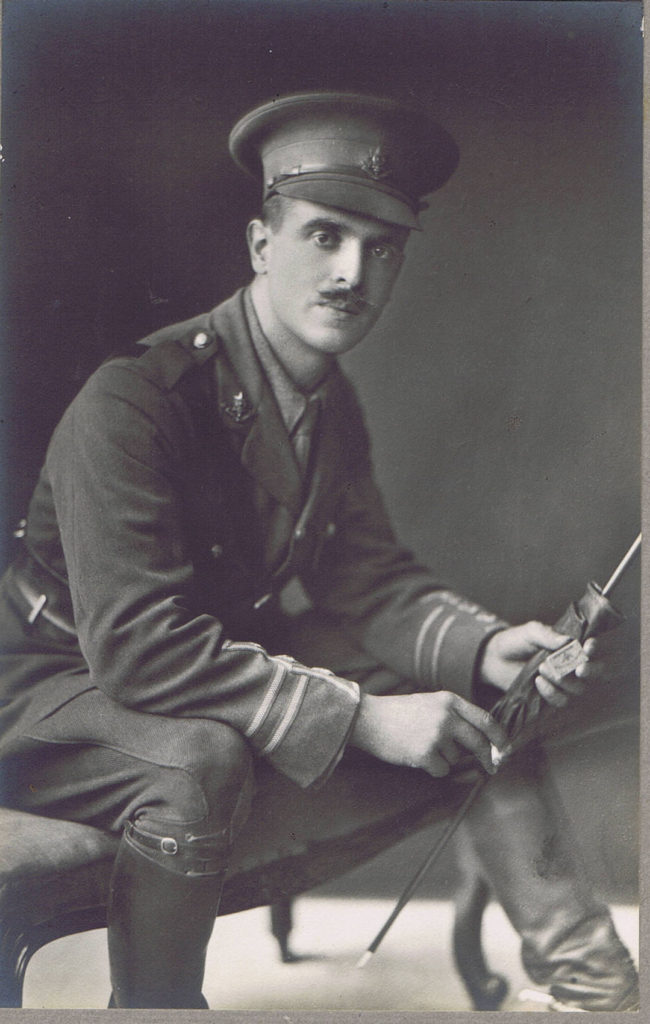
Faced with these difficulties the British defences collapsed. 21000 prisoners were taken on the first day alone, and such was the confusion that it was only when British artillery well to the rear came under infantry attack on the first day that the scale of the disaster became apparent. On the 21st March the 2/8th Battalion of the Worcestershire regiment were defending the Ellis Redoubt during the Battle of St Quentin and lost 19 officers and 560 other ranks killed, wounded or captured. For the rest of March the British were pushed back, often in a disorganised manner.
But there was also fierce resistance, often organised in an ad hoc fashion, and though the line bent back some 40 miles with heavy casualties, it did not break.
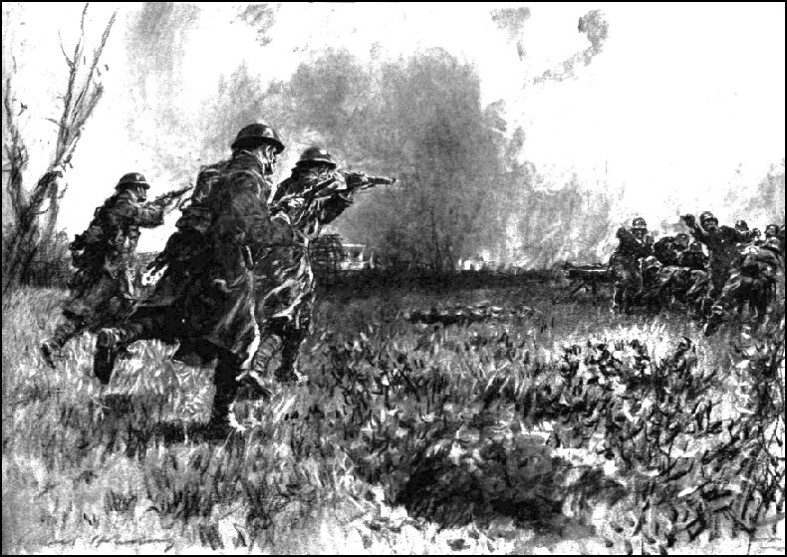
The Germans then launched their second attack (Operation Georgette) on 9 April in Flanders. The formula was the same, except that the British were in greater strength here, and there was no fog. Nevertheless the Germans inflicted heavy casualties and made significant territorial gains. Indeed the situation looked so grim that on 11 April 1918 Sir Douglas Haig issued a Special Order of the Day urging his soldiers to fight to the end. But like Operation Michael, Operation Georgette also petered out.
The Final Phases
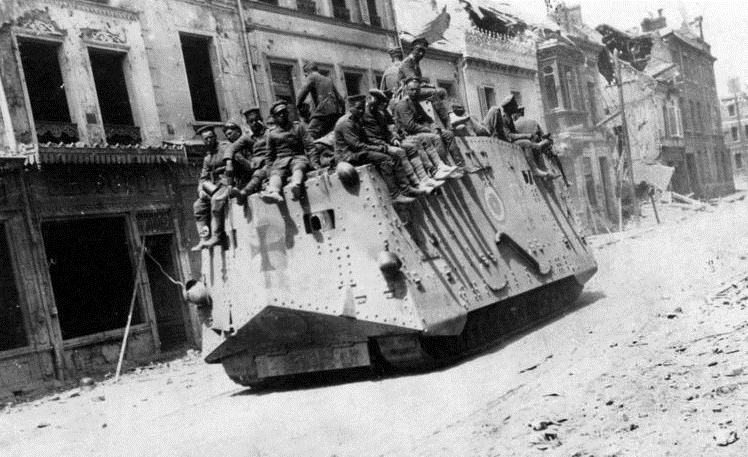
In May, the Germans attacked again against French and British formations along the Chemin des Dames ridge. The formula was again the same, and it delivered heavy Allied casualties and major territorial gains against soldiers unwisely concentrated in positions vulnerable to the bombardment, and in many cases recovering from their involvement in Operation Michael. But although this attack at one point threatened Paris, once again it ran out of steam.
The 1st Battalion of the Worcestershire Regiment along with much of 8th Division was virtually wiped out at the Battle of the Aisne on 27th May. The 3rd and later the 10th Battalions were also drawn into the fighting. The fight of the 1st Battalion in their trenches at the Aisne, of the 3rd Battalion at Concevreux of the 10th Battalion at Lhery, and the heroic stand of Colonel Grogan’s men on the Bouleuse Ridge contributed in no small measure to the success of the allied defence.
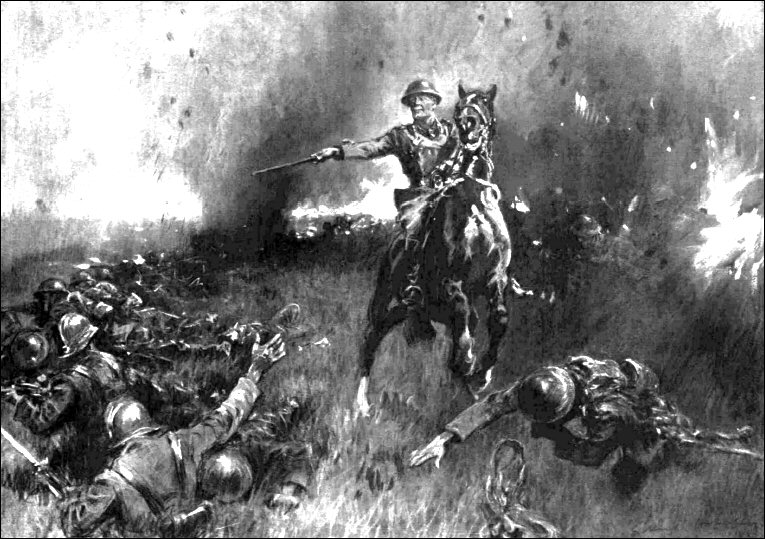
By early June the Kaiserschlacht had run its course, and had failed. The great unanswered question of 1914-18 was how to exploit a successful breakthrough, and even the German army had been unable to provide the answer (though it would do so in 1940). The British army was still intact, and the German casualties had for the first time in the war exceeded the very heavy casualties inflicted on the Allies. In July the Allies began a series of counter-attacks against an exhausted enemy, which in November compelled Germany to sue for peace. The Kaiserschlacht had been intended to win the war for Germany; its failure made German defeat inevitable.
People Facet Tree